
Weezer played just four songs from its latest album, The Gold Album, during its Los Angeles stop on the North American leg of "The Gathering" tour. The sold-out Crypto.com Arena crowd appeared to welcome the choice, cheering through a setlist of 26 songs that spanned the band's '90s and early 2000s catalog.
A Setlist Built for the Hometown Crowd
The Gold Album, released Aug. 21, was the focus of the tour, but the band's Saturday night show leaned heavily on its older records. Songs from the Green Album, Pinkerton and the Blue Album drew the loudest reactions, and the near two-hour set moved through each era of the band's history. The approach reflected the divided nature of the fanbase, which has long argued over whether the band's early records or its newer work define it.
Staging and Stagecraft
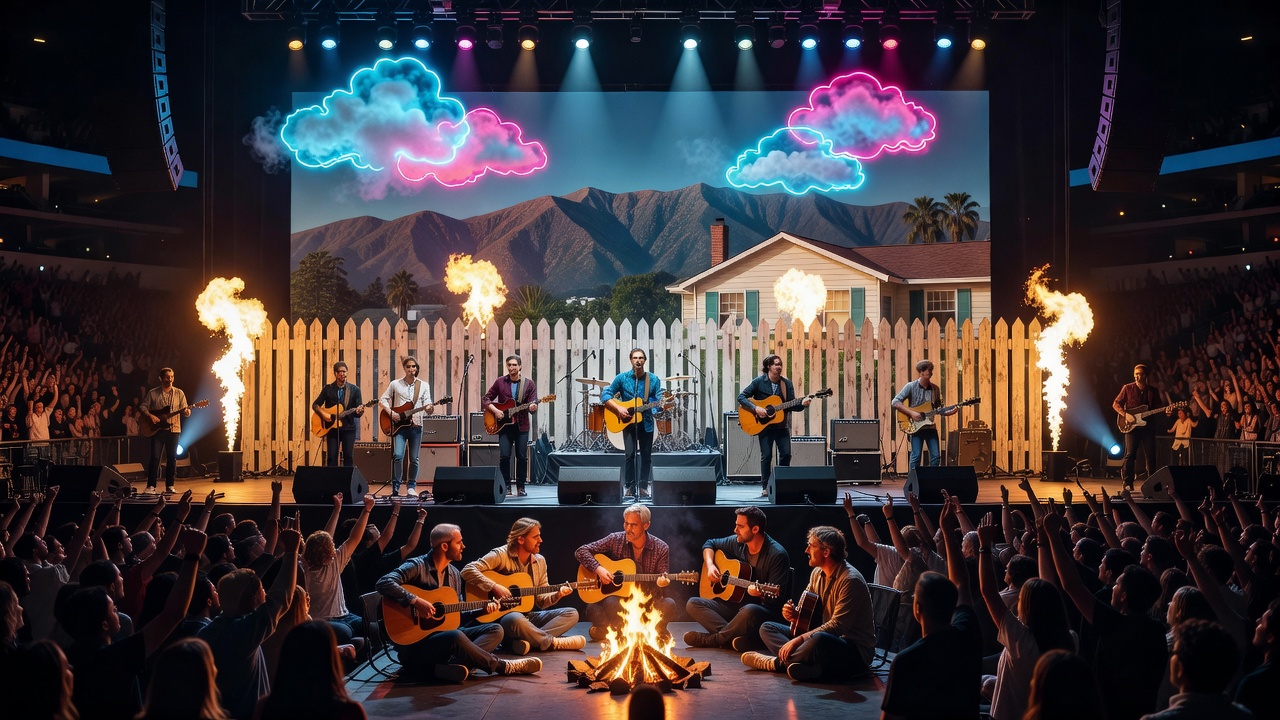
The production shifted between styles. A white picket fence and house set against painted LA mountains framed the opening, while fire cannons punctuated "Hash Pipe" and neon clouds and an eclipsing sun accompanied other numbers. Some of the effects felt mismatched with a power pop act, and the visual variety sometimes made the show feel less cohesive than its music. The stripped-down acoustic segment, with the band seated around a campfire for "Long Time Sunshine" and a version of "In the Garage," offered a clearer contrast.
Guests, Skits and the Overall Effect
Silversun Pickups singer Nikki Monninger rejoined the band for three duets, including "We Might as Well Be Strangers" and "I Just Threw Out the Love of My Dreams," which showed how well the band's collaborative material works live. Scripted bits, including a staged power outage and a mock pool jump, added levity that suited a band having visible fun after years on the road. The Shins opened with a set that closed on a cover of R.E.M.'s "It's the End of the World as We Know It (And I Feel Fine)." Weezer's decision to prioritize older material was a clear bet on what its audience wanted, and the arena's response suggested that the bet paid off.