
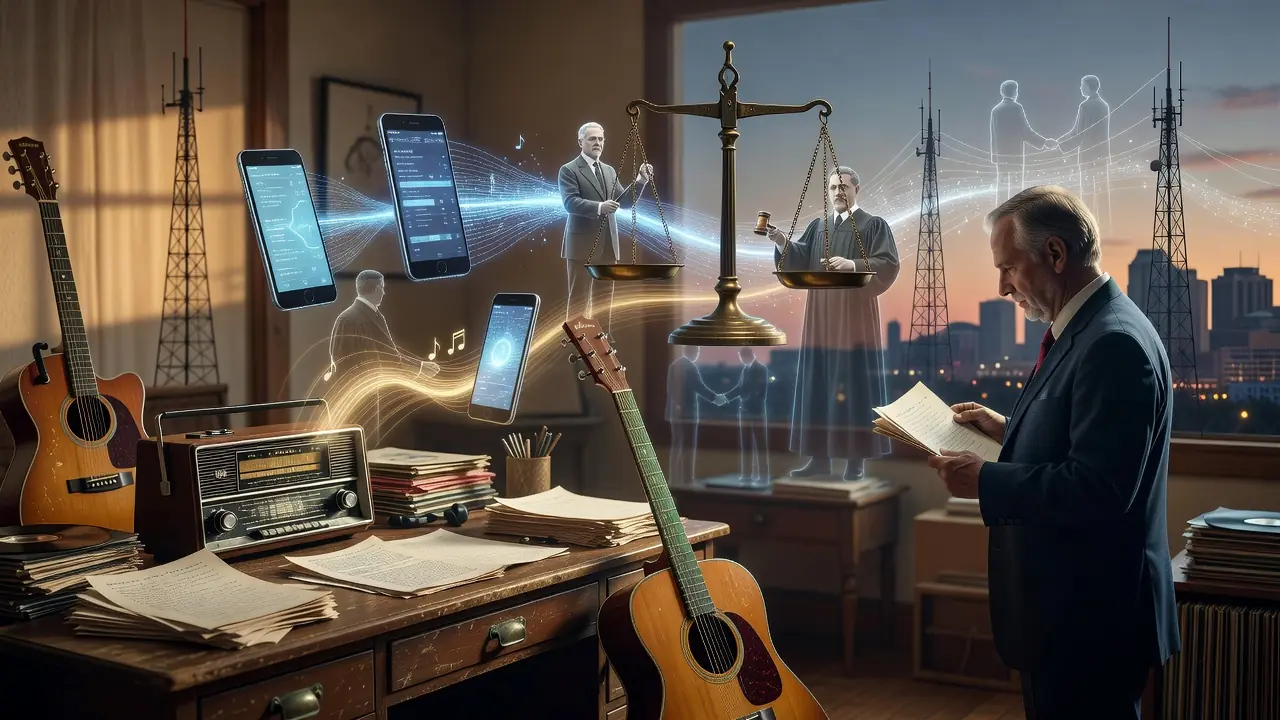
Fordham Law School professor Joseph Fishman, a copyright scholar with a background in musicology, is researching how federal licensing rules shape the income and creative choices of professional songwriters. His forthcoming book, based on dozens of interviews with Nashville writers, suggests that a system built for earlier eras of the music business is struggling to match how people listen today.
A licensing system built piecemeal
Fishman argues that the rates streaming services and radio stations pay to songwriters and publishers are not set purely by the market. Instead, they are shaped by a small agency within the Library of Congress and by judges in New York. That regulated structure developed gradually over decades of the music industry, and according to Fishman, it is having difficulty keeping pace with how most consumers now listen to music.
Radio still drives income for many writers
Although most music consumption now happens through digital streaming, Fishman says the songwriters he interviewed who do not also perform as recording artists rely mainly on FM radio for their income. Their earnings, he reports, depend heavily on how often their songs receive airplay. If radio listenership continues to decline, that dependence could pose a serious challenge for copyright policy.
Similarity disputes and everyday practice
High-profile infringement trials involving famous musicians have led many commentators to argue that copyright law's vague similarity standard discourages creativity. Fishman's interviews suggest the effect on working songwriters is weaker than that debate implies. Most of the writers he spoke with were not especially worried about legal risk, and their idea of wrongful copying centered on interpersonal trust rather than a side-by-side comparison of works. Fishman frames these findings as a reminder that copyright law's goal of encouraging new work is easier to assess when the creators it affects are studied directly.